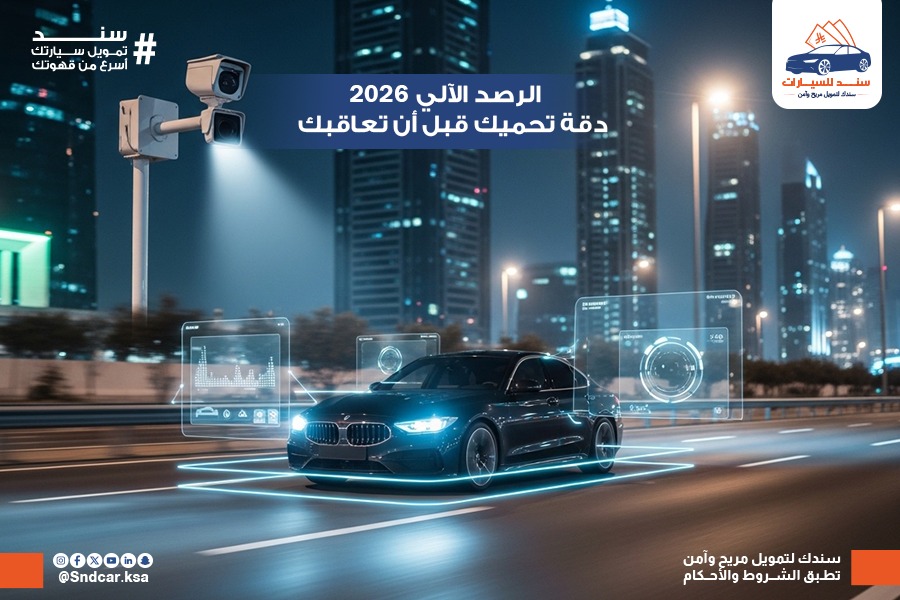
As 2026 unfolds, the Kingdom of Saudi Arabia has entered an advanced phase in traffic management. Automated monitoring has evolved from a simple violation-recording tool into a fully integrated smart system that enhances road safety and supports Vision 2030 goals aimed at reducing traffic-related fatalities and injuries.
Today, traffic cameras no longer focus solely on speeding or red-light violations. They now rely on artificial intelligence and big data analytics to detect driving patterns and hazardous behaviors with high precision. Violations are recorded and drivers are notified electronically through the Absher platform within minutes.
A Smart System That Reduces Human Intervention and Enhances Fairness
The modern monitoring network is built on a wide array of high-resolution cameras and ground sensors deployed across highways and urban roads. These systems analyze images and data in real time, minimizing human involvement while ensuring greater accuracy, neutrality, and transparency in issuing violations.
Key capabilities of the new-generation automated monitoring system include:
Detecting mobile phone use, even when partially concealed.
Identifying failure to wear seat belts for drivers and front passengers.
Monitoring sudden lane deviations.
Detecting failure to yield to pedestrians.
Tracking dangerous behaviors at intersections and roundabouts.
The primary objective is no longer punishment alone, but the creation of a self-regulating traffic environment—where drivers recognize that roads are monitored using advanced technologies, encouraging voluntary compliance with safety regulations.
Key Violations Detected Automatically and Associated Fines
Below are the most common violations recorded automatically under the Kingdom’s traffic regulations:
Violation
Minimum Fine (SAR)
Maximum Fine (SAR)
Exceeding the speed limit (by more than 25 km/h)
500
900
Running a red light
3,000
6,000
Using a handheld mobile phone while driving
500
900
Not wearing a seat belt
150
300
Failure to adhere to designated lanes
300
500
Improper parking causing traffic obstruction
100
150
Driving in designated bus lanes
500
900
Failure to yield to pedestrians
100
150
Driving without required headlights
500
2,000
Failure to maintain vehicle license plates
500
900
Note: Violation details and penalties may vary according to updates in traffic regulations.
Automated enforcement is no longer limited to fixed cameras. It now includes:
Drones: Monitoring vital areas and wide road networks.
Mobile Monitoring Units: Patrol vehicles equipped with smart cameras that record violations while in motion.
Ground Sensors: Measuring truck loads and detecting tire safety issues.
Smart Control Rooms: Integrating camera feeds with relevant authorities to enable rapid response to incidents.
How to Contest a Violation via Absher
If you receive a traffic violation notification and believe it was issued unfairly, you may submit an objection electronically through the Absher platform by following these steps:
Log in to your Absher Individuals account.
Navigate to “My Services,” then select “Traffic.”
Click on “Object to Traffic Violations.”
Select the violation you wish to contest.
Review the violation image and provide a clear explanation for your objection.
Agree to the terms and submit the request.
Objections must be submitted within 30 days of the violation date. Violations that have already been paid or have received a final ruling cannot be contested.
The Importance of Automated Monitoring in Road Safety
The system contributes to several strategic objectives:
Ensuring traffic fairness: Applying regulations equally to all.
Reducing severe accidents: Detecting risky behavior at an early stage.
Improving traffic flow: Minimizing violations that cause congestion.
Enhancing public awareness: Transforming compliance into a daily driving culture.
Supporting smart cities: Providing accurate data to improve infrastructure planning.
Conclusion
Saudi Arabia’s automated traffic monitoring system represents a significant leap in leveraging technology to protect lives and regulate road networks. Traffic violations are no longer merely financial penalties, but regulatory tools designed to safeguard society and promote a culture of responsible driving. Compliance with traffic laws today is not only a legal obligation—it is a national responsibility that contributes to building a safer and more sustainable future.
In a move that reflects Mazda’s gradual transition toward an electric future, the company has officially unveiled the Mazda CX-6e
Posted on 2026-01-24 04:04 PM
كشفت شركة أوتوموبيلي لامبورغيني عن أحدث ابتكاراتها خلال أسبوع مونتيري للسيارات 2025، حيث أطلت على العالم بسيارتها الفائقة محدودة الإنتاج
Posted on 2025-09-28 10:16 AM